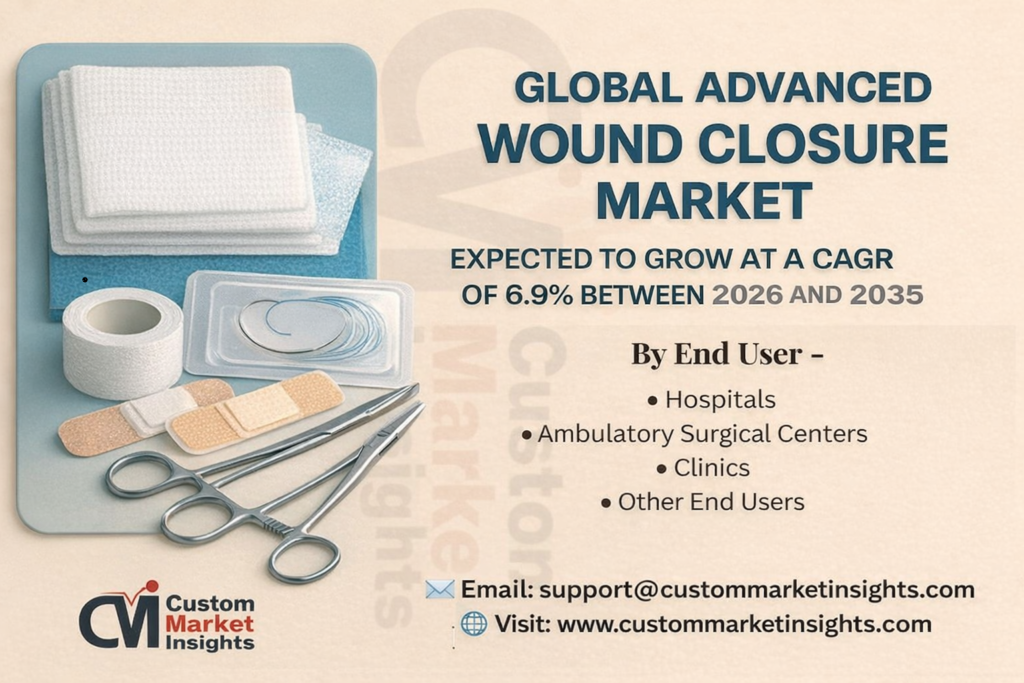
The global advanced wound closure market is experiencing steady and transformative growth, driven by rising surgical procedures, technological innovations, and increasing healthcare demands worldwide. It is estimated that the market size was USD 18.47 billion in 2025 and is projected to grow at a CAGR of 6.9% between 2026 and 2035, reaching approximately USD 19.68 billion in 2026 and further expanding to USD 32.54 billion by 2035.
Advanced wound closure solutions have become an essential component of modern healthcare, offering improved healing outcomes, reduced infection risks, and enhanced patient comfort. These technologies are widely used across a variety of surgical disciplines, making them indispensable in hospitals, ambulatory surgical centers, and clinics.
Market Overview
Advanced wound closure involves the use of specialized devices and materials such as sutures, staplers, tissue adhesives, and hemostatic agents to close wounds effectively and promote healing. Unlike traditional methods, these solutions are designed to minimize tissue trauma, improve precision, and accelerate recovery time.
The market is expanding rapidly due to the growing need for efficient surgical outcomes and reduced hospital stays. Increasing healthcare investments and the global shift toward minimally invasive procedures are further accelerating adoption.
Key Market Drivers
Rising Prevalence of Chronic Diseases
Chronic diseases such as diabetes, cardiovascular conditions, and obesity are increasing globally, leading to a higher number of surgeries. These conditions often require advanced wound care solutions due to complications in healing, thereby driving demand for advanced wound closure products.
Growing Volume of Surgical Procedures
The global rise in surgical procedures—ranging from orthopedic and cardiovascular surgeries to cosmetic and general surgeries—is a major growth driver. As surgical volumes increase, so does the need for reliable and efficient wound closure technologies.
Aging Population
The geriatric population is more susceptible to chronic illnesses and requires frequent surgical interventions. This demographic trend significantly contributes to the growing demand for advanced wound closure solutions.
Technological Advancements
Continuous innovation in wound closure devices, such as powered staplers and bioengineered adhesives, is improving surgical outcomes. These advancements are enabling surgeons to achieve better precision, reduced complications, and faster healing.
Shift Toward Minimally Invasive Surgeries
Minimally invasive procedures are becoming increasingly popular due to their benefits, including smaller incisions, reduced pain, and quicker recovery. Advanced wound closure products are essential in these procedures, further boosting market growth.
Market Segmentation
By Product Type
The advanced wound closure market is segmented into:
- Sutures
- Absorbable Sutures
- Non-absorbable Sutures
- Surgical Staplers
- Manual Staplers
- Powered Staplers
- Tissue Adhesives
- Natural Adhesives
- Synthetic Adhesives
- Hemostatic Agents
- Thrombin-based Agents
- Fibrin Sealants
- Collagen-based Agents
- Others
- Mechanical Closure Devices
- Others
Among these, surgical staplers and absorbable sutures hold a significant market share due to their widespread use in various surgical procedures. Powered staplers, in particular, are gaining popularity for their precision and efficiency.
By Application
Applications of advanced wound closure products include:
- Cardiovascular Surgery
- Orthopedic Surgery
- General Surgery
- Cosmetic Surgery
- Gynecological Surgery
- Neurological Surgery
- Ophthalmic Surgery
- Other Applications
General and orthopedic surgeries dominate the application segment due to the high volume of procedures performed globally. However, cosmetic and minimally invasive surgeries are witnessing rapid growth.
By End User
The market is categorized into:
- Hospitals
- Ambulatory Surgical Centers
- Clinics
- Other End Users
Hospitals account for the largest share due to the availability of advanced infrastructure and skilled professionals. Meanwhile, ambulatory surgical centers are gaining traction due to cost efficiency and shorter patient stays.
Regional Analysis
North America
North America leads the global advanced wound closure market, driven by advanced healthcare infrastructure, high healthcare spending, and early adoption of innovative technologies. The United States remains the dominant contributor in this region.
Europe
Europe holds a substantial market share, supported by strong government healthcare systems and increasing surgical procedures. Countries such as Germany, the UK, and France are key contributors.
Asia Pacific
Asia Pacific is expected to witness the fastest growth during the forecast period. Rapid urbanization, increasing healthcare investments, and a growing patient population in countries like China and India are fueling demand.
Middle East & Africa
The region is gradually expanding, supported by improving healthcare infrastructure and rising awareness about advanced medical treatments.
Latin America
Latin America is emerging as a promising market, with Brazil and Argentina leading growth due to increasing healthcare access and investments.
Competitive Landscape
The advanced wound closure market is highly competitive, with major players focusing on innovation, strategic collaborations, and product launches to strengthen their market position.
Key companies operating in the market include:
- Johnson & Johnson (Ethicon)
- Medtronic plc
- B. Braun Melsungen AG
- Smith & Nephew plc
- 3M Company
- Baxter International Inc.
- Integra LifeSciences Holdings Corporation
- Teleflex Incorporated
- Conmed Corporation
- Arthrex Inc.
- Stryker Corporation
- Becton Dickinson and Company
These companies are investing heavily in R&D to develop advanced products that improve surgical efficiency and patient outcomes.
Key Developments
- In July 2024, Johnson & Johnson’s Ethicon division launched the ECHELON 3000 Powered Stapler, featuring advanced gripping surface technology for enhanced tissue handling and reduced firing force.
- In November 2025, Medtronic plc received FDA approval for the Signia Stapling System with Tri-Staple Technology, offering improved compression and adaptability for varying tissue thickness.
These developments highlight the ongoing innovation in the market, aimed at improving surgical precision and patient safety.
Emerging Trends
Adoption of Bioengineered Adhesives
Bio-based and synthetic tissue adhesives are gaining traction due to their ability to reduce scarring and improve healing outcomes.
Integration of Smart Technologies
Advanced wound closure devices are increasingly incorporating smart features such as feedback systems and real-time monitoring to enhance surgical precision.
Focus on Infection Prevention
Manufacturers are developing antimicrobial sutures and advanced sealing technologies to reduce the risk of post-surgical infections.
Growth of Outpatient Surgeries
The increasing shift toward outpatient and same-day surgeries is boosting demand for efficient and easy-to-use wound closure solutions.
Market Challenges
- High Cost of Advanced Devices: Premium products such as powered staplers can be expensive, limiting adoption in low-resource settings.
- Regulatory Hurdles: Strict approval processes can delay product launches.
- Risk of Complications: Improper use of wound closure devices can lead to infections or delayed healing.
Future Outlook
The future of the advanced wound closure market looks promising, with sustained growth expected over the next decade. Technological advancements, increasing surgical volumes, and rising healthcare awareness will continue to drive demand.
Emerging markets in Asia Pacific and Latin America are expected to play a crucial role in shaping the market’s future. Additionally, the growing focus on minimally invasive procedures and patient-centric care will further accelerate adoption.
Conclusion
In conclusion, the global advanced wound closure market is poised for significant expansion, driven by rising surgical procedures, technological innovations, and increasing healthcare needs. With a projected CAGR of 6.9% from 2026 to 2035, the market is expected to reach USD 32.54 billion by 2035.
Key factors such as the growing prevalence of chronic diseases, aging population, and advancements in wound closure technologies are fueling growth. Despite challenges such as high costs and regulatory barriers, the market offers substantial opportunities for manufacturers and healthcare providers.
As innovation continues and healthcare systems evolve, advanced wound closure solutions will remain a critical component of modern surgical care, ensuring better outcomes and improved quality of life for patients worldwide.